Research

Odor & Ammonia Reduction Study

Understanding the role of Diatomaceous Earth in moisture control and odor management

Environmental Problem: Odor Formation

Odor is not only a matter of cleanliness. It is often a signal of underlying biological processes occurring within an environment. In areas where organic waste accumulates, such as:

odor is typically generated through the decomposition of organic matter. One of the most common contributors is: Ammonia (NH₃) which is formed from the breakdown of urea in animal waste and organic residues. When environmental conditions include:

odor formation becomes more intense. Therefore, effective odor management is not about masking smell, but about controlling the environment that causes it.

Objective of the Study

This study aims to understand the role of diatomaceous earth (DE) in controlling factors related to odor formation, with a focus on:
The findings help explain how moisture control using porous materials can contribute to odor reduction.

Scientific Background

Ammonia is a volatile gas that readily evaporates, especially in high-humidity environments.

In areas with accumulated waste, such as animal urine, microbial processes convert urea into ammonia. As humidity increases, these processes accelerate, resulting in stronger odor formation. Therefore, one of the most effective approaches to odor control

is managing environmental moisture.

Why Diatomaceous Earth

Diatomaceous earth (DE) has a naturally porous structure formed from the silica skeletons of diatoms. At a microscopic level, the material structure resembles:

This large surface area allows DE to:

Study Methodology

The study focuses on observing material behavior in moisture-rich environments.

1. Material Preparation

Diatomaceous earth samples were prepared using graded materials with particle structures suitable for moisture absorption.

2. Moisture Exposure

The material was applied in environments with:

to observe performance behavior.

3. Environmental Observation

Key environmental factors were monitored, including:
to evaluate the role of the material in environmental control.

Result Summary

The study shows that diatomaceous earth plays a significant role in absorbing environmental moisture. As moisture levels decrease, conditions that support odor formation also decline. This indicates that moisture control is a key mechanism in reducing odor accumulation in enclosed environments.

Interpretation

Odor control is not solely dependent on the use of fragrance. It is fundamentally related to: - managing the environment that generates odor - using materials that absorb moisture By reducing moisture levels, the environment becomes less favorable for odor formation. This principle forms the foundation of odor control solutions that address the root cause of the problem.

Real-World Applications

The findings of this study can be applied to environments such as:

From Research to Product Solutions

Insights from this study have been applied to the development of products such as:

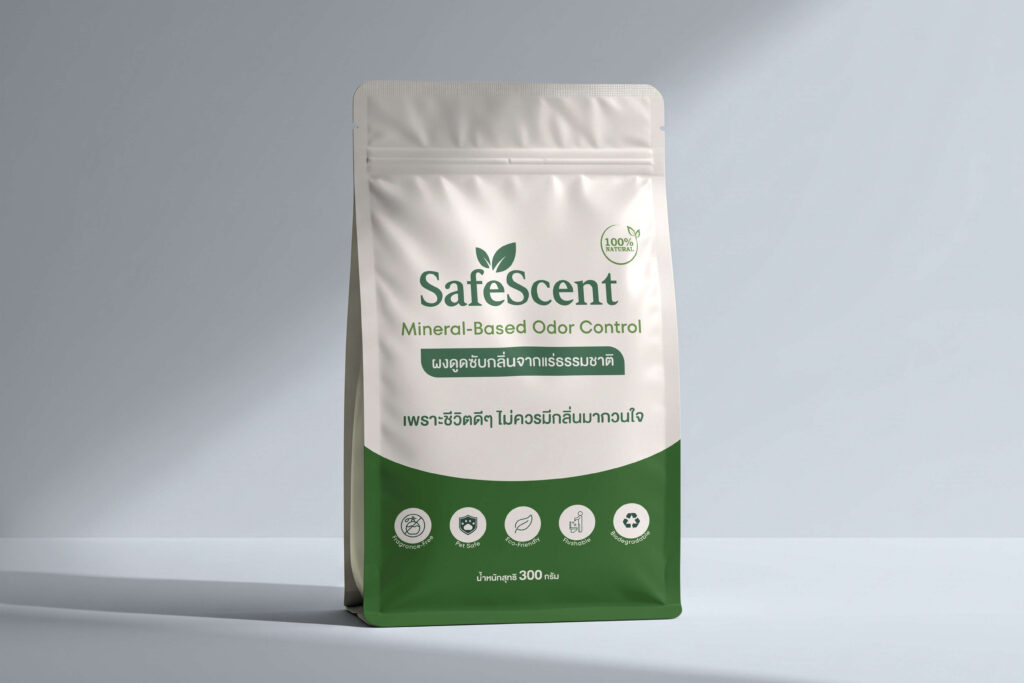
SafeScent™

Odor and moisture control solution for residential environments

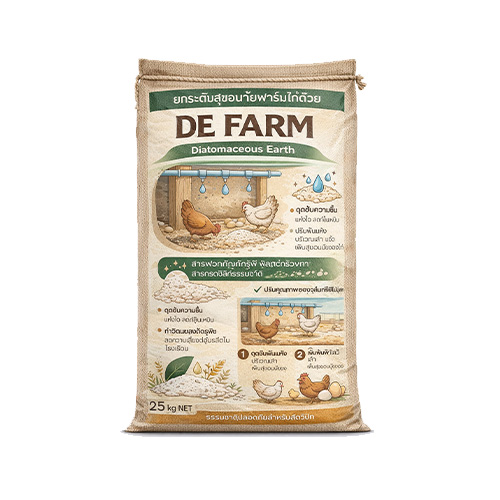
FarmDry™

Moisture and odor management solution for livestock and agricultural environments
These products are developed based on an understanding of material behavior and environmental dynamics, not simply as short-term solutions.

Research as a Tool for Environmental Management

At DONTUM, odor control is not only about comfort. It is connected to:

Scientific research enables natural materials to be developed into solutions that are both effective and sustainable over the long term.